
Urban Fantasy
Some evidence retained from previous checks (news_coverage)
The latest refresh did not reverify all saved evidence. Previously recorded values and references have been retained. Not re-verified this run.
The Story So Far
Short impact summary
Urban Fantasy (2024), published by Lever Press, has been cited 1 time. Beyond that, it has been downloaded 325 times and is used in teaching.
Full narrative
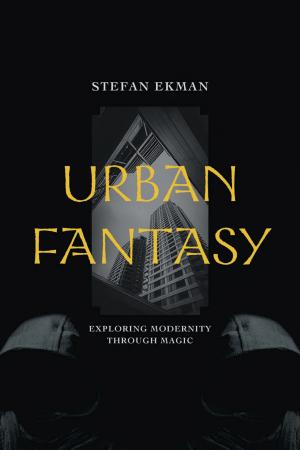
Urban Fantasy by Stefan Ekman was published by Lever Press in 2024. Conceptually, the work connects to Modernity, Fantasy, MAGIC (telescope), Art and Aesthetics.
OpenAlex records 1 citation.
In teaching, it is discussed in 4 recorded lectures. It is discussed on Wikipedia (4 mentions). It has been downloaded 325 times via OAPEN. Open Library reports a combined count of 1 reading logs and catalog editions. A further 4 mentions appear in other attention signals. Its subject matter aligns with Sustainable cities and communities among the Sustainable Development Goals.
Impact metrics ▾
Crossref Event Data: 163 locally archived records, not a current or complete total. The public API was retired on 23 April 2026.
Inferred roles
Heuristic signals from citation composition, usage, and media activity. Learn about all roles ↗
Access Availability
- DOI: https://doi.org/10.3998/mpub.14414299
- OA status: Hybrid
- OA source: Publisher-claimed
- OA basis: Publisher landing page marked open access
- OA evidence chain: Publisher-claimed → OpenAlex/Crossref
- OA verification: Claimed OA, not in DOAB
- Landing page: https://doi.org/10.3998/mpub.14414299
Full text beyond the publisher
1 distinct location with full-text evidence. Availability is reported by the index and may change.
- BiblioBoard Library Catalog (Open Research Library)
Open full text
OpenAlex repository full-text location
Who is citing this work? OpenAlex
Analysis of 1 citing works. Too few citing works yet to say how concentrated they are by institution. See the full list on OpenAlex →
Open Science Signals PRISM
Open peer review and repository accessibility signals for this work.
Open Peer Review PRISM
- Status: No explicit PRISM review record returned
- Interpretation: neutral signal — this does not mean the book had no peer review; only that PRISM returned no explicit title-level review metadata.
- Publisher context: Lever Press
Online mentions & public discourse Open Web
Community platforms and curated expert sources (newsletters, blogs, podcasts), plus 163 locally archived Crossref events (the public API was retired 23 Apr 2026 — historical coverage only).
- SHORT TAKE: Urban Fantasy: Exploring Modernity through Magic by Stefan Ekman: Review by Gary K. Wolfe 02/01/2025 · Locus Online
Community engagement
Book reference verified in this article's references or bibliography. Checked revision.
Teaching, Practice & Library Adoption
OpenCourseWare Mentions Google Custom Search
No verified course syllabi found in open university repositories.
Video Lectures & Presentations YouTube Transcripts
-
Magical Modernity: A Brief Anatomy and History of Urban Fantasy with Stefan Ekman Romancing the Gothic"...Discussed in video...."AI Academic Confidence: 90%
-
Urban fantasy: intervju med Stefan Ekman Fantasykanalen"...Discussed in video...."AI Academic Confidence: 90%
-
Vad är urban fantasy? Fantasykanalen"...Discussed in video...."AI Academic Confidence: 70%
-
Urban Fantasy: Going Queer. - Coming Soon! IvaMoor - Silbenalchemie"...Discussed in video...."AI Academic Confidence: 70%
Library & Community Access Open Library
-
Community Reach:
1 logs/editions ↗
Tracked across Open Library community reading lists and catalog editions.
- Institutional Availability:
Contributors & affiliations OpenAlex
Authors
- Stefan Ekman First Corresponding ORCID
Concepts & topics OpenAlex
UN Sustainable Development Goals OpenAlex
OPERAS Metrics Widget
That's the evidence for Urban Fantasy
1 citation, 325 downloads, Hybrid access — drawn from the sources cited throughout this page. Save it as a PDF to cite or share this impact story elsewhere.
Download report